- Title: Forbidden Planet
- IMDb: link
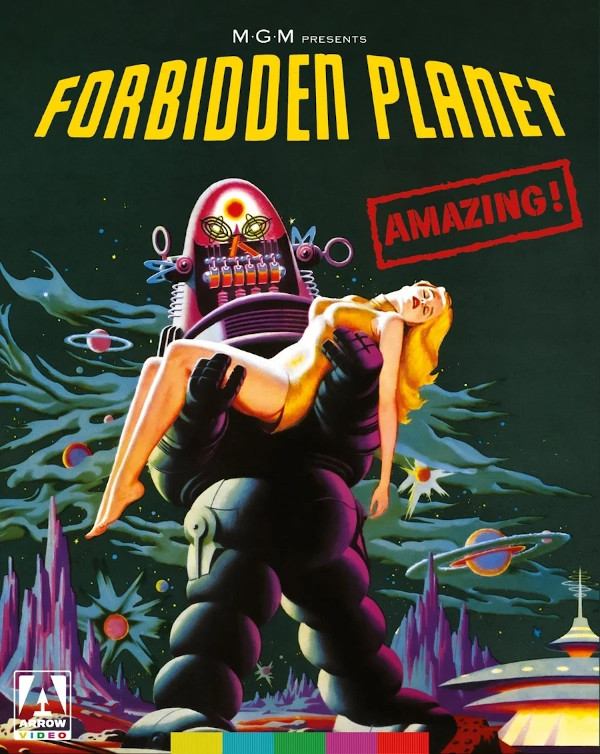
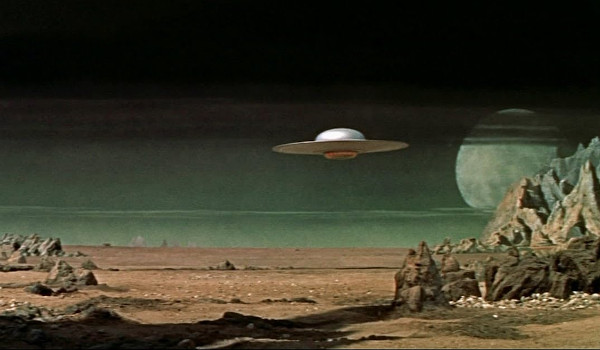
Loosely inspired by William Shakespeare’s The Tempest, 1956’s Forbidden Planet is regarded as one of the best science fiction films of its era. The story follows the crew of a United Planets starship to the far off planet Altair IV where a scientific expedition disappeared years ago. On arriving at the planet, Commander Adams (Leslie Nielsen) is warned by the soul surviving member of the lost crew not to land.
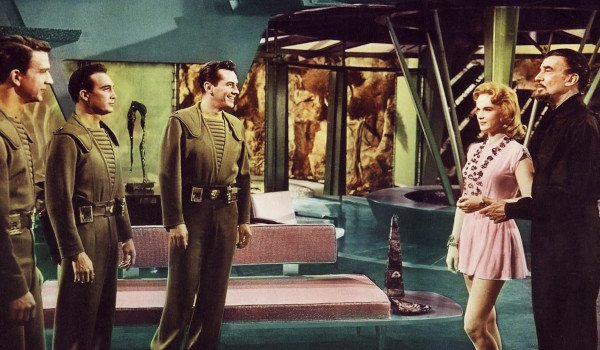
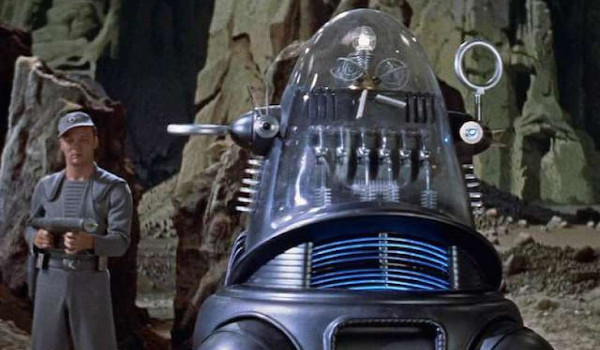
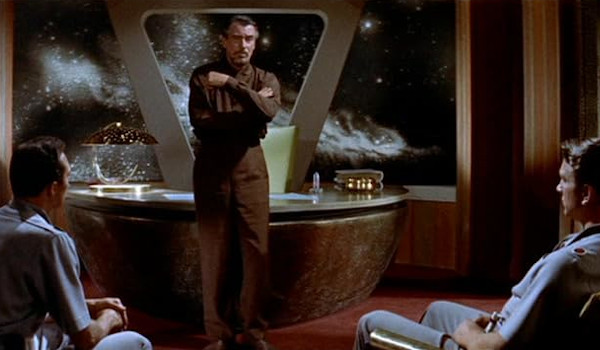
Ignoring the warning, Adams discovers a mostly barren planet with an advanced home of Dr. Edward Morbius (Walter Pidgeon) and his daughter Alta (Anne Francis). The only other being on the planet appears to their servant Robby (Frankie Darro), and impossibly advanced robot that Morbius claims to have built. Morbius reveals to Adams, Lieutenant Farman (Jack Kelly), and Lieutenant Ostrow (Warren Stevens) that the rest of the crew of Bellerophon died years ago, killed by some mysterious force which only sparred Morbius, his daughter, and his wife (who died later of natural causes).
The return of a new crew reawakens the dormant creature as Adams and his men must solve the mystery of one of the best movie monsters of all time and uncover the secrets of how a philologist, with no understanding of engineering, architecture, or robotics, could construct the far-too-advanced home and robot which even the best engineers on Earth could never replicate.
Hitting the screen a decade before Star Trek appeared on television, and nearly two decades before the release of Star Wars, Forbidden Planet was the first film of its kind to set a story in deep space using faster-than-light travel, and was both a critical and box office success which is regarded even higher today. Along with it’s monster, it also gave us Robby, philosophy wrapped in science fiction, the idea of an away team exploring a strange new world, and an eerie electronic score that perfectly fit the setting of Altair IV.
Released multiple times on home video, the new 4K includes Blu-ray and 4K versions of the film, a double-sided fold-out poster, collectors’ booklet, audio commentary by film historians Kim Newman and Barry Forshaw, deleted scenes, Robot Chicken footage featuring Robby the Robot, and featurettes on the score, Robby, 50s science fiction, and the film creation and legacy.