
Charlie & The Chocolate Factory
Tim Burton returns to the world of Roal Dahl for a swing at Charlie and the Chocolate Factory, but bigger budgets (and bigger stars) don’t always equal bigger thrills and more engaging story. While it’s a little more faithful to the original story, Burton’s need to push the weirdness eventually alienates us from the experience, which is handled with none of the awe and joy of the original. Depp makes Wonka a stunted man-child rather than just a wildly eccentric man, which serves to make the film much like the confections of the story: sweet and enjoyable, but ultimately forgettable.
Charlie & The Chocolate Factory
3 Stars
Retooling a much beloved (if flawed) film is touchy business in any regard, but there are not many films as sacred to a generation as Willy Wonka & the Chocolate Factory. Having Tim Burton and Johnny Depps’ names attached may have lessened the worry factor, but Gene Wilder all but immortalized the role of Willy Wonka in the 1971 film version.
So how does Burton’s version hold up? It’s both better and not as good, to tell the truth.
 |
In this adaptation (which is admittedly more faithful to Roald Dahl’s classic novel) we’re given a more complete look at Charlie (Freddie Highmore from “Finding Neverland”;) and his down-on-their-luck family as they eek by a tenuous existence in a ramshackle and leaning home. Charlie’s parents (Noah Taylor & Helena Bonham Carter) have to support both Charlie and two sets of grandparents (David Kelly, Elieen Essell, David Morris, and Liz Smith. All of whom manage to steal every scene they’re in), while trying to maintain high spirits and encourage their young son.
When the mysterious candy maker Willy Wonka (Depp) announces a contest wherein five lucky children will be allowed to tour his incredible factory, Charlie knows he has no chance of winning, as he’s only able to afford one chocolate bar a year. Any takers on whether Burton derails the universe by having Charlie lose out on a golden ticket? Yah, I didn’t think so.
Charlie and his Grandpa Joe (Kelly) get their chance to visit the Wonka Factory, alongside the gluttonous Gloops (Philip Wiegratz and Franziska Troegner), the overachieving Beauregardes (Annasophia Robba and the creepily great Missi Pyle), video-game fanatic Mike Teavee (Jordan Fry, who looks like a minature Barry Pepper) and his hapless dad, and of course Veruca Salt (Julia Winter) and her over-indulgent father (the great James Fox), each of whom is summarily dispatched by their own faults (with a little neglect and encouragement from Wonka) to the accompaniment of the song stylings of the Oompa Loompas (Deep Roy).
With the exception of a wonderfully morose back-story for Wonka, Charlie & the Chocolate Factory does do an admirable job of keeping faithful to the story’s origins, but strangely this film turns out much more light-hearted than the 1971 version. For all the technical achievements and storytelling improvements, this version also lacks a lot of the warmth and wonder of the original. We’re shown various wild contraptions, each making candy in a seemingly impossible way, but rather than focusing on the wonderment and awe they should inspire, each set piece feels more like background images which are given only cursory examination.
Charlie is much less an active protagonist once the factory doors are opened, pushed aside by the more colorful and obnoxious children on the screen. He’s there only to serve as a moral barometer and to reinforce the wonder of the Wonka experience. And of course there’s Wonka himself. Depp had some extremely large shoes to fill with this role, but rather than attempt to capture the benevolent lunacy of Wilder’s take, here Wonka is more an arrested man-child whose creepy mannerisms aren’t just some mischievous facade, but a reflection of a truly stunted being. With his CGI pasty face and flat out childlike manners, there’s no possible way his performance isn’t meant to conjure up a Jacko association.
Sadly, this time Wonka never really warms up to the world. True to Burton form, his weirdness is unchanged and uncompromised from our first encounter, much like the film itself. The real failing in this film is that it never finds a way to open up to the audience, as it’s too wrapped up in its own world to let us in for more than a peek. While many, many elements of this film easily surpass the original, the childlike wonder and sense of exploration are sorely lacking.
Still, even die-hard fans will find much to enjoy this time around, and only time will tell if this more modern adaptation will capture the imagination of this generation.
Charlie & The Chocolate Factory Read More »

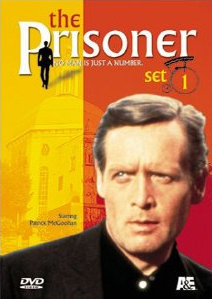 The most original show ever made, and perhaps the best art form ever shown on television, The Prisoner is simply a masterpiece. Hailed as the first television classic, Patrick McGoohan’s allegory of an individual being trapped in a modern society that wants nothing more or less than to break him down into meaningless number is gripping television. More art than television, the show has been compared to Franz Kafka, George Orwell, Lewis Carroll, Aldous Huxley, G.K. Chesterton, Jonathan Swift, Gustav Meyrink, Alfred Kubin and the surrealist painters such as Rene Magritte. The show created awe, hysteria, and finally a profound appreciation for McGoohan’s masterpiece that stands alone as a shining example of what television can, and for at least one year strove, to be. It raises as many questions as answers, but does both with style. The show certainly wasn’t made for the casual viewer, or in an attempt to create a huge hit for the BBC. In McGoohan’s own words, It’s “not to everyone’s taste. It was never intended to be. I wasn’t making Coca-Cola.” No, it was in fact something much, much sweeter.
