
Munich
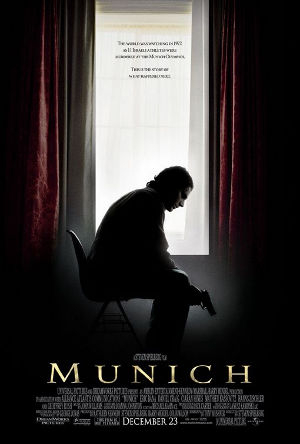
2005 may well be remembered as the year that Hollywood remembered it’s power to tell relevant stories with depth and intelligence. The theme of consequences has run through out most of the better films this year (a fact I’ll go into more with my end of year roundup), but topping off the list is Steven Spielberg’s Munich, which tells the story of Israel’s response to the killing of 11 Israeli athletes during the 1972 Olympics by Palestinian terrorists. Eric Bana heads up a secret team of Mossad agents whose only job is to find and eliminate anyone connected to the plotting, funding, or execution of the Munich attack, a job he takes with relish only to find the cost of vengeance is always more violence. Beautifully shot with exceptional performances from all the actors involved, Munich tells a story that’s every bit as relevant today as it was 30 years ago. Perhaps it’s not the uplifting holiday fare you might seek on this Season, but Munich is very easily the best film of 2005.
Munich
5 Stars
How far is too far in righting a wrong? Can vengeance ever be a means to an end, no matter how noble the purpose? Or is retribution merely a link in an endless chain of violence? These are themes that resonate just as much today as they did in the mid 70s, when Steven Spielberg’s Munich takes place. Even handed to a point, Spielberg refuses to pick sides in the war of aggression between Israel and it’s attackers, but it’s perfectly clear that he knows that blindly labelling the other side as ‘evil’ won’t solve the problem. By showing us the bloodthirsty desires of a nation through the eyes of the men charged with making it happen, Spielberg reminds us that it’s far too easy to become that which we seek to kill.
 |
Opening with a mix of archival and dramatized footage from Black September’s kidnapping and eventual killing of 11 Israeli athletes, Spielberg uses his opening salvo to show a world unfamiliar with terrorism: the Black September members are helped over the gate into the Olympic Village of 1972 Munich Germany by a group of carousing athletes who are unconcerned with security. Minutes later the world will change thanks in no small part to the 24 hour live television coverage of the kidnapping and shootout. People from around the world were shocked by a realization that times had changed, but none more so than the Israeli government, who soon decide to find those responsible and make them pay. Soon a group of Mossad agents are officially removed from the records and set loose in Europe with the single aim of tracking down and killing anyone involved in the Black September attack. Led by Avner (a phenomenal Eric Bana), these five men give up their identities, their families, and their country in the name of extracting a bloody retribution upon Israel’s enemies.
What begins as almost eager anticipation soon turns to grim determination (and finally outright paranoia) during the years Avner and his crew are out on their mission. Cut off from all they know, eventually they find themselves living and dealing among the same elements they’re supposed to be fighting. So much so that their grim crusade makes the team as hunted as their prey, unsure of who to trust or even who they’re supposed to be after.
Munich could easily be considered the flip side of Spielberg’s summer entry, War of the Worlds. Where WotW dealt with the assault, Munich explores the inevitable reaction of a government obsessed with retribution. But where Worlds was all CGI, flash, and thrill, Munich is washed out colors, grim 70’s style cinematography, and unrelenting tension. There are no easy bad guys in Munich. Even the so called enemy is giving a human face, and often the hit squad’s allies are as shady as their target.
Spielberg finds a perfect guide for us in Eric Bana’s Avner. The undistinguished son of a war hero, Avner is eager to prove himself in service of a country he loves even if it means leaving his pregnant wife for a mission that may well take years. He’s surrounded by a team as dedicated (and inexperienced) as himself, all portrayed rather convincingly by Daniel Craig, Ciaran Hinds, Mathieu Kassovitz, and Hanns Zischler.
As difficult to watch as some of the violence is (indeed the returning flashbacks to the Munich attack are heartwrenchingly realized), it’s almost harder to watch Avner’s descent into moral confusion and paranoia. After one of their own is killed, the remaining team members exact bloody vengeance on their own in a scene that’s one of the most disturbing of the film. There’s no question the individual has it coming to them, but when it happens you feel the same horror and confusion as the men who are supposed to be the good guys. It’s at that moment when they all realize that they’ve become no different from those they’re supposed tobe fighting against. They seem to know it can only get worse from there.
A shockingly violent film that never lets you forget the cost of that violence, Munich strips away slogans and feel good phrases like ‘war on terror’ to show us the human cost of pursuing vengeance both personal and as a nation. A final shot that includes the then-new World Trade Center drives home the inescapable fact that until we forsake the desire for retribution, we’ll continue to pay a heavy price for our efforts. In a year of great films, Munich is an unflinching powerhouse of a movie, and easily the best thing Spielberg has made in years. Go see this movie.



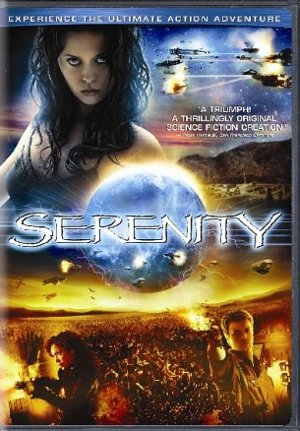 A TV show made into a movie; a movie made into a DVD. Although a hit with a small and vocal fan base (and a fair amount critical support), Joss Whedon’s sci-fi western never found a home and was cancelled after only twelve episodes. Whedon’s drive and the fans furvor wouldn’t allow the series to die and Universal Pictures stepped in to provide the opportunity to continue to explore these characters in a feature film now available on DVD.